EDITORIAL
INTERVIEW
John Paesano on his exuberant, ‘80s-inspired orchestral score for Netflix’s sci-fi hit The Boroughs

Words by Katie Hawthorne
Widower Sam (played by Alfred Molina) is reluctant to move into The Boroughs, a picture-perfect retirement community that promises its residents the "time of their life".
As he casts a suspicious eye over its manicured lawns and cheery neighbours, John Paesano’s thrilling orchestral score confirms that both Sam and the audience are in for a wild ride. Designed to raise your heartrate and plunge you straight into the story, Paesano’s original music has a dramatic sense of scale: strings slash and soar, tumultuous woodwind bring magic and violence.
The latest collaboration between Netflix and the Duffer Brothers’ (Stranger Things), The Boroughs became the UK’s number-one series from the streaming giant in less than a week. Led by a star-studded ensemble of septuagenarians (including Geena Davis, Alfre Woodard and Clarke Peters), the monster thriller is inspired by the adventure films its cast were making in the ‘80s and ‘90s. Paesano grew up watching precisely those “big Hollywood popcorn movies,” and had long been waiting for a project like this: “All the stars aligned.”
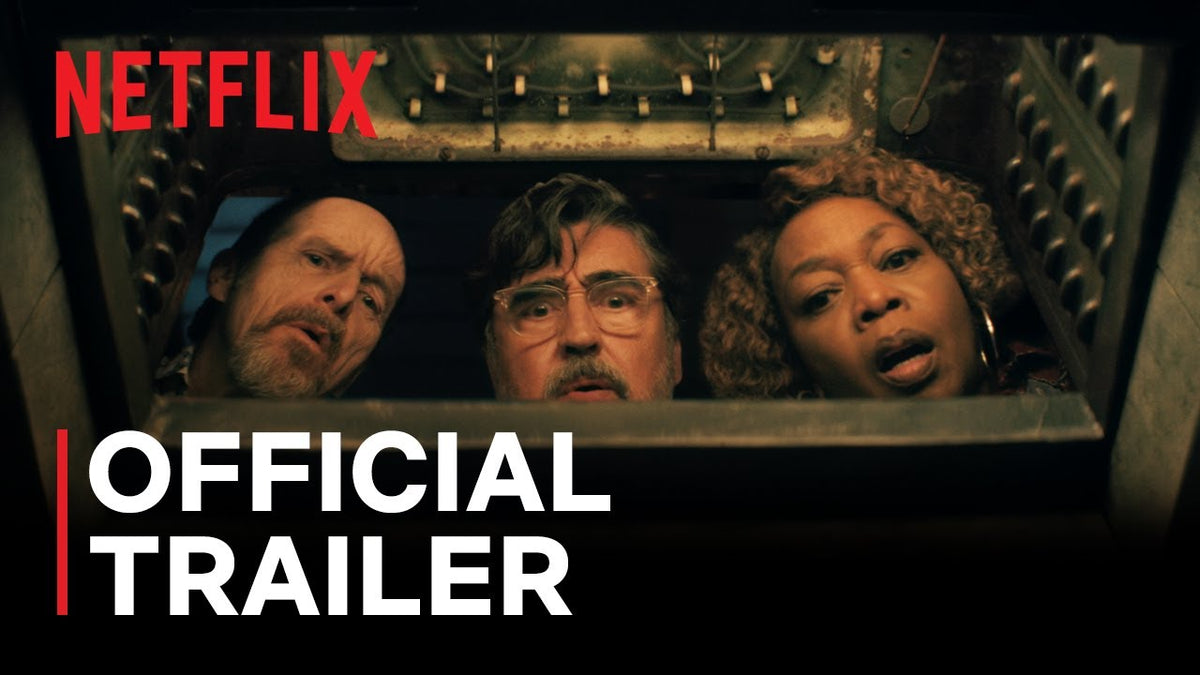
The Boroughs | Official Trailer
2:42
“I got into music because I love film,” he says, grinning. The BAFTA-winning, Emmy-nominated composer (Maze Runner, Kingdom of the Planet of the Apes, Daredevil, Legend of Zelda) studied at the Conservatoire de Paris and Berklee College of Music, and learned first-hand from industry titans Jerry Goldsmith and John Williams, whose score for the 1987 coming-of-age epic Empire of the Sun was Paesano’s gateway into the world of movie music.
“My first love was symphonic, orchestral scores, and back then the one thing you could take away from a movie was the soundtrack. I loved that I could listen to Williams’ score and relive the film: I thought that was the coolest magic trick in the world.”
"We wanted the score to be right up there with the actors, as far as the storytelling goes. We wanted to be exuberant with the music."
Despite The Boroughs’ present-day setting, the show has a decidedly retro flavour. Each cosy retirement condo is fitted with mid-century furnishings, but the vintage touch goes beyond set-dressing: the 8-part series honours a “throwback” commitment to twisty plot, colourful acting and bold musical storytelling.
“The show’s not necessarily a period piece, but the idea of it is,” Paesano explains. “We really wanted to adopt that feeling those movies from the ‘80s had – that suspension of disbelief for a wild, crazy, fun adventure. In modern film scores, you’re often trying to sink into the background, to be a vibe. But we wanted this score to be right up there with the actors, as far as the storytelling goes. We wanted to be exuberant with the music.”
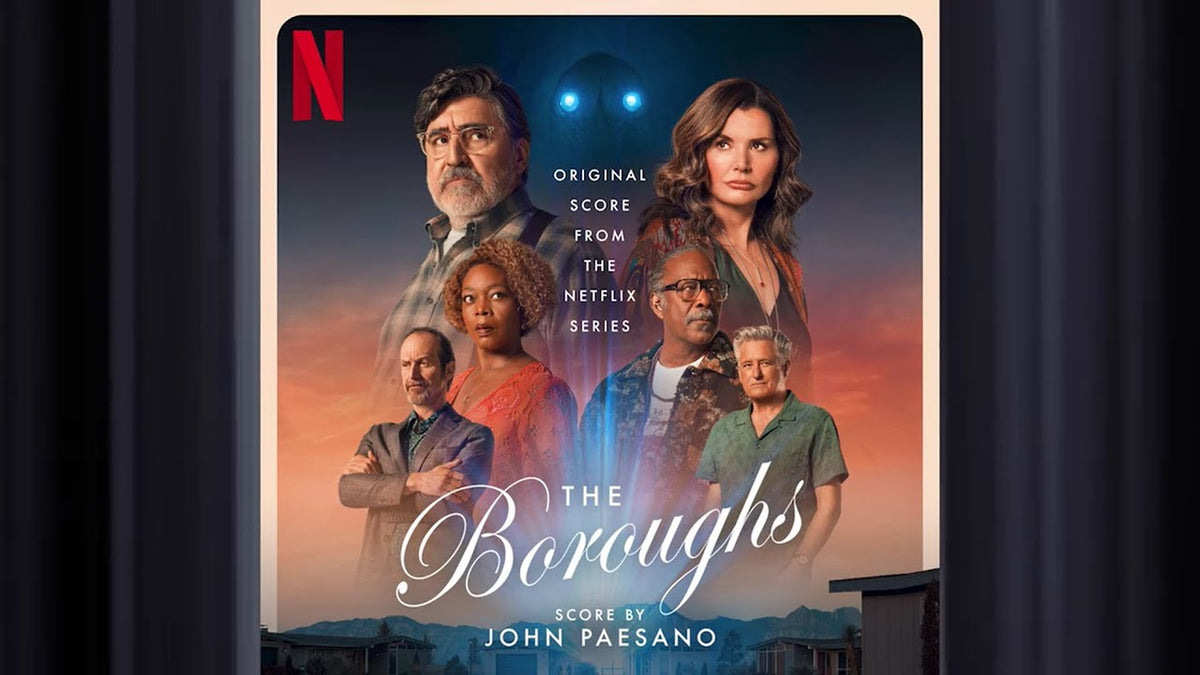
Welcome To The Boroughs | Official Soundtrack
4:11
In an early conversation with show creators Jeffrey Addiss and Will Matthews, Paesano proposed that the scoring process should adopt an era-specific workflow. The first phase was to begin composing long before shooting started: this gave him the rare luxury of time to talk with the writers about character, motivation and plot, and to experiment musically without visual impetus. In the ‘80s, composers often started writing without immediate access to picture – “and that’s why those scores are so vibrant and melodic and musical,” Paesano says. “They could tell the story without need of the film.”
This commitment to musical worldbuilding led to the creation of four key character suites, which form the opening tracks on The Boroughs’ original soundtrack album. The first, ‘Welcome to the Boroughs’, introduces a glittering four-note motif which represents the neighbourhood throughout the entire score, morphing as it interacts with other character themes. “It can be happy, sad, scary, magical – it’s a base, just like the Boroughs is a great base for all of these interesting things happening.”
"When it comes to sci-fi, it’s rare to hear a big, sweeping orchestral score anymore. But because it’s done so rarely, it’s like a newer sound again."
During the writing process, Paesano used Spitfire Audio’s Albion IV Uist and Abbey Road Orchestra to share his vision with The Boroughs’ creative team. “Albion IV has an amazing collection of orchestral effects that you can actually play, be musical with. I loved that I could let [the team] hear an impression of what the score was going to be, because when it comes to sci-fi it’s rare to hear a big, sweeping orchestral score anymore.”
At first he worried that the Duffer Brothers might not take to his approach, given Stranger Things’ synthesizer-heavy soundtrack. “I thought, will the Duffers go nuts when they hear this stuff? Their score was all synth, and here I come with this giant orchestral palette.” Paesano laughs. “But the coolest thing about the Duffers is they just want bold ideas. They weren’t worried about the instrumentation, they just wanted something unique. Because symphonic orchestral scores are done so rarely, it’s like a newer sound again.”

The other key to Paesano’s era-specific sound was scale. “The Abbey Road libraries have that big scoring-stage presence, and scores in the ‘80s often had this distance to them,” he says. “Back then it felt like you were an audience member, but in a lot of modern scores it feels like you’re standing right next to the conductor. I really wanted to capture that distance.”
The importance of that big-room feeling fed into the final recording process, which took place over ten days with the Vienna Synchron Orchestra. Unusually, they scored as a full ensemble, rather than ‘striping’ the orchestra into sections: “I wanted that organic sound,” Paesano says. “There’s a character to it when all this sound gathers in a room.”
"What you really want to score is the subtext of the scene."
Inspired by films such as Close Encounters of the Third Kind, Paesano wanted to revive woodwind for sci-fi scores. “They are a really special, unique group that are tricky to use, and you don’t hear a lot of it anymore. Back then they were underneath everything; they can soften things, or make things feel very aggressive.” Combined with his laser focus on character, this led to a particularly important musical moment for retired journalist Judy (Alfre Woodward).
“Normally I would grab a bunch of strings and do a nice, warm, muted sound – but we did nothing but a chorus of woodwind and it was really powerful. It reminded me that you don’t have to have everyone playing all the time, which is something I’m starting to learn,” he laughs.
The Boroughs has a dark humour to how it presents reality: one character’s paranormal encounter is breezily written off as dementia. For Paesano, this played straight into his belief that “what you really want to score is the subtext of the scene”. It results in fascinating moments when his score feels at odds with the action (no spoilers, all I’ll say is: crows) because the music focusses completely on one character’s individual perspective.

But the biggest musical trick of all was to give the cast a score that turned back time. “I always reminded myself: these aren’t ‘older’ people - at the end of the day, we’re all still 12 years old at heart. You never lose that sense of adventure.”
In turn, that exuberant spirit gave Paesano the confidence to let loose creatively. “Were they worried about being ‘cool’ when they made Indiana Jones? No! They were having fun. On The Boroughs we were having fun and being kids ourselves. I wasn’t worrying about what my adult-self thought. I just said: Do it!”
Nominations-Round Voting for the 78th Emmy Awards is open from June 11 through June 22

INTERVIEW
Ludwig Göransson on Oscar-winning scores

INTERVIEW
Karlotta Skagfield on scoring science

GUIDE